





Finding the right three-wheeler parts can make or break your vehicle’s performance and your wallet. This guide helps three-wheeler owners, mechanics, and fleet managers make smart purchasing decisions that save money and prevent headaches down the road.
Buying cheap parts might seem tempting, but the wrong choice often leads to frequent breakdowns, safety issues, and expensive repairs. You need to know what actually matters when shopping for three-wheeler parts.
We’ll walk you through understanding your vehicle’s specific needs and why quality beats a low price tag every time. You’ll also learn how to spot authentic parts from reliable sources and calculate the real long-term costs before you buy.
Understand Your Three-Wheeler’s Specific Requirements
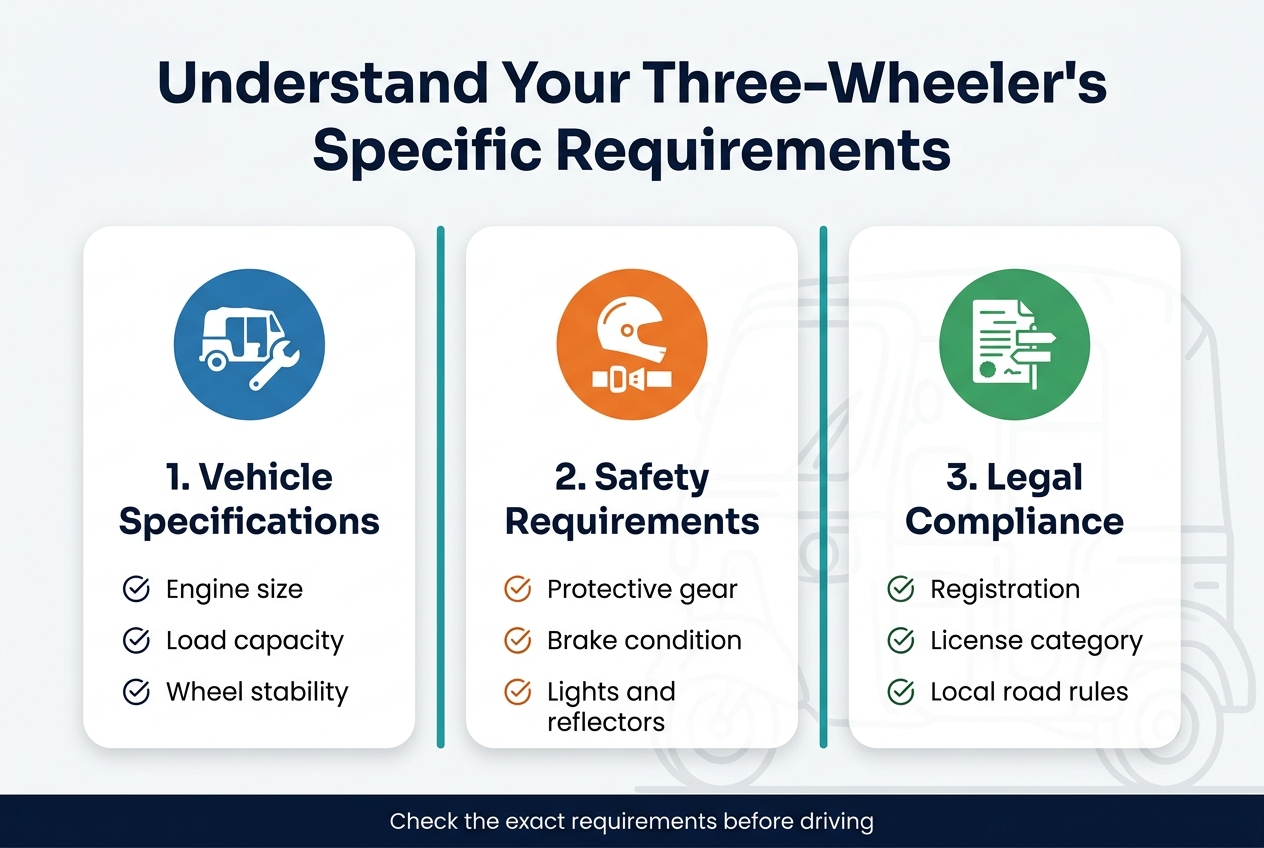
Identify your vehicle’s make, model, and year
Getting the right parts starts with knowing exactly what three-wheeler you own. Your vehicle’s make, model, and year aren’t just basic details – they’re the foundation for finding compatible parts that actually fit and work properly. Check your owner’s manual, registration documents, or the vehicle identification plate usually mounted on the frame or dashboard. Different model years often have subtle but critical differences in parts specifications, even within the same make and model line.
Many three-wheeler owners make the costly mistake of assuming parts are interchangeable across similar models. A Bajaj RE from 2018 might look identical to a 2020 model, but internal components like brake systems, electrical wiring, or engine parts could have significant variations that affect compatibility.
Check manufacturer specifications and compatibility
Manufacturer specifications serve as your roadmap to finding the right parts. These detailed documents outline exact dimensions, materials, performance ratings, and compatibility requirements for every component in your three-wheeler. Most manufacturers provide comprehensive parts catalogs that include part numbers, cross-references, and technical specifications.
Pay special attention to load ratings for suspension components, electrical specifications for wiring and lighting systems, and engine compatibility for performance parts. Mismatched specifications can lead to premature wear, safety issues, or complete system failures. Cross-reference part numbers whenever possible, and don’t rely solely on visual similarity when selecting replacement parts.
Determine whether you need OEM or aftermarket parts
The choice between Original Equipment Manufacturer (OEM) and aftermarket parts significantly impacts your three-wheeler’s performance, reliability, and resale value. OEM parts guarantee exact fit and original performance standards but typically come with higher price tags. These parts maintain your vehicle’s warranty coverage and ensure seamless integration with existing systems.
Aftermarket parts offer cost savings and sometimes enhanced performance features, but quality varies dramatically between manufacturers. Premium aftermarket brands often exceed OEM specifications, while budget options might compromise on materials or precision. Consider your budget, performance goals, and how long you plan to keep the vehicle when making this decision.
| Part Type | Pros | Cons | Best For |
|---|---|---|---|
| OEM | Guaranteed fit, warranty protection | Higher cost, limited options | Critical safety components, newer vehicles |
| Premium Aftermarket | Enhanced performance, competitive pricing | Variable quality control | Performance upgrades, older vehicles |
| Budget Aftermarket | Low cost, wide availability | Quality concerns, shorter lifespan | Non-critical components, temporary fixes |
Consider your usage patterns and driving conditions
Your three-wheeler’s operating environment directly influences which parts you need and how frequently they require replacement. Commercial operators running daily routes need heavy-duty components that withstand constant use, while occasional recreational users can often choose standard-grade parts without compromising reliability.
Urban driving with frequent stops and starts demands different brake pad compounds and clutch specifications compared to highway cruising. Dusty or muddy conditions require enhanced air filtration systems and sealed electrical connections. Hot climates stress cooling systems and rubber components more than temperate environments.
Evaluate your typical payload, terrain types, weather exposure, and maintenance intervals. A food delivery three-wheeler operating in busy city traffic needs different tire compounds, brake systems, and engine oil specifications compared to a rural passenger transport vehicle. Document your specific use case to communicate effectively with parts suppliers and ensure you get components designed for your operating conditions.
Prioritize Quality and Durability Over Price
Research reputable brands and manufacturers
When shopping for three-wheeler parts, the brand behind the product matters more than you might think. Established manufacturers invest heavily in research and development, ensuring their components meet strict quality standards. Companies like Bajaj Auto, TVS Motor, and Hero MotoCorp have built their reputations over decades by delivering reliable parts that withstand demanding conditions.
Look for manufacturers with ISO certifications and quality management systems in place. These companies often have dedicated testing facilities where parts undergo rigorous stress tests, temperature cycling, and endurance evaluations. Original Equipment Manufacturers (OEMs) typically offer the best compatibility and performance, while reputable aftermarket brands like Bosch, Lucas, and Denso provide high-quality alternatives at competitive prices.
Check if the manufacturer has a strong presence in your region. Local availability of parts and service support can save you significant time and money down the road. Brands with extensive dealer networks usually provide better customer service and faster resolution of warranty claims.
Compare material quality and construction standards
The materials used in three-wheeler parts directly impact their lifespan and performance. High-grade steel components resist corrosion better than cheaper alternatives, while premium rubber compounds in seals and gaskets maintain flexibility across temperature extremes.
Pay attention to manufacturing processes too. Parts made using precision casting or CNC machining typically offer better dimensional accuracy and surface finish compared to mass-produced alternatives. For engine components, look for parts with proper heat treatment and surface hardening where applicable.
| Component Type | Premium Materials | Standard Materials | Performance Impact |
|---|---|---|---|
| Brake Pads | Ceramic or Semi-metallic | Organic compounds | Better heat dissipation, longer life |
| Filters | High-density media | Basic paper/cloth | Superior filtration, extended intervals |
| Bearings | Premium steel with coatings | Standard steel | Reduced friction, longer service life |
| Gaskets | Viton or PTFE compounds | Basic rubber | Chemical resistance, temperature stability |
Read customer reviews and performance ratings
Real-world feedback from other three-wheeler owners provides invaluable insights that technical specifications alone cannot offer. Look for reviews that mention specific use cases similar to yours – commercial operators face different challenges than private users.
Focus on reviews that discuss long-term performance rather than just initial impressions. A part that works well for the first month might fail prematurely under continuous use. Pay attention to comments about installation difficulty, compatibility issues, and actual vs. claimed performance.
Professional mechanics’ forums and trade publications often contain detailed assessments of parts performance across different brands. These sources typically provide unbiased evaluations based on extensive hands-on experience with various components.
Evaluate warranty terms and coverage
A comprehensive warranty reflects the manufacturer’s confidence in their product. Look beyond just the duration – examine what’s actually covered. Some warranties exclude wear items or require specific maintenance intervals to remain valid.
Understanding warranty terms helps you calculate the true cost of ownership. A slightly more expensive part with a three-year warranty might prove more economical than a cheaper alternative with limited coverage. Keep detailed records of installation dates and maintenance activities to ensure warranty compliance.
Consider the warranty claim process as well. Manufacturers with streamlined claim procedures and local service centers make warranty claims much more convenient than those requiring parts to be shipped internationally for evaluation.
Verify Part Authenticity and Source Reliability
Choose authorized dealers and certified suppliers
Finding genuine three-wheeler parts starts with working with the right suppliers. Authorized dealers have direct relationships with manufacturers and carry legitimate inventory backed by warranties. These dealers undergo training and certification processes that ensure they understand the products they’re selling. You’ll find authorized dealer listings on manufacturer websites or through official customer service channels.
Certified suppliers often display official logos and badges from manufacturers they represent. Look for certifications like ISO quality standards, which show the supplier maintains proper inventory management and quality control processes. Many manufacturers also provide dealer verification systems where you can enter a dealer’s information online to confirm their authorized status.
Building relationships with trusted suppliers pays off over time. They can source hard-to-find parts, provide technical advice, and offer better pricing for regular customers. Don’t hesitate to ask dealers about their authorization status – legitimate suppliers are proud to share their credentials.
Check for proper certification marks and documentation
Authentic parts come with specific markings and documentation that counterfeit products often lack or poorly replicate. Original equipment manufacturer (OEM) parts typically feature stamped part numbers, batch codes, and quality marks that match manufacturer specifications. These markings should be clear, properly aligned, and permanently etched or molded into the part.
Documentation is equally important. Genuine parts include certificates of authenticity, warranty cards, and installation instructions printed on quality paper with official logos. The packaging itself tells a story – authentic parts come in branded boxes with proper product information, barcodes, and manufacturing dates.
Serial numbers and holographic stickers are common anti-counterfeiting measures. Cross-reference these numbers with manufacturer databases when possible. Some companies provide smartphone apps that let you scan QR codes or enter serial numbers to verify authenticity instantly.
Avoid counterfeit parts and suspicious sellers
Counterfeit parts flood the market, especially online marketplaces where oversight is limited. These fake components may look identical to genuine parts but often use inferior materials and manufacturing processes that compromise safety and performance. Red flags include unusually low prices, sellers with limited feedback, and listings with poor-quality photos or vague descriptions.
Be wary of sellers who can’t provide clear answers about part origins or refuse to share certification documents. Legitimate sellers welcome questions about authenticity and readily provide proof of their product sources. If a deal seems too good to be true, it probably involves counterfeit parts.
Price comparison across multiple sources helps identify suspiciously low-priced items. While everyone wants a good deal, parts priced significantly below market rates often indicate counterfeits. Stick to established retailers, even if their prices are slightly higher – the extra cost provides peace of mind and long-term reliability.
Consider Long-term Maintenance and Replacement Costs
Calculate Total Cost of Ownership Including Installation
Smart three-wheeler owners look beyond the sticker price when buying parts. The real cost includes installation fees, tools needed for the job, and potential downtime while your vehicle sits in the shop. A $50 brake pad might seem cheaper than a $80 premium option, but if the cheaper part requires replacement twice as often, you’ll end up paying more in labor costs alone.
Installation complexity varies dramatically between parts. Simple items like air filters or light bulbs are DIY-friendly, while transmission components or electrical systems demand professional expertise. Factor in diagnostic fees, shop hourly rates (typically $75-150), and the time your three-wheeler will be out of service. Some repairs might keep you off the road for days, especially if parts need special ordering.
Assess Availability of Future Replacements
Nothing’s worse than discovering your three-wheeler needs a part that’s been discontinued. Before purchasing, research the manufacturer’s production timeline and market presence. Established brands typically maintain parts availability for 10-15 years, while smaller manufacturers might phase out support much sooner.
Check multiple suppliers to gauge long-term availability. If only one vendor carries specific parts, that’s a red flag. Look for cross-compatible alternatives from different manufacturers – many three-wheelers share components with motorcycles or small cars, giving you backup options when original parts become scarce.
Factor in Maintenance Requirements and Intervals
Different parts have vastly different maintenance schedules. Engine oil filters need replacement every 3,000-5,000 miles, while high-quality brake pads might last 15,000-25,000 miles. Cheaper alternatives often require more frequent attention, creating hidden costs through increased maintenance frequency.
Consider seasonal maintenance needs too. Battery performance drops in cold weather, tires wear differently based on driving patterns, and suspension components face varying stress levels. Parts that need frequent adjustment or seasonal replacement can become expensive over time, even if their initial cost seems reasonable.
Compare Repair Costs Versus Replacement Benefits
Sometimes repairing existing parts costs more than buying new ones. Rebuilding a carburetor might run $200-300 in labor and parts, while a new unit costs $150. Factor in warranty coverage – new parts typically come with 6-12 month guarantees, while repairs often carry shorter protection periods.
Age plays a role here. If your three-wheeler is relatively new, investing in quality parts makes sense. For older vehicles, budget-friendly options might be more practical since other components will likely need attention soon anyway. Balance the part’s expected lifespan against your vehicle’s remaining useful life.
Ensure Professional Installation and Support
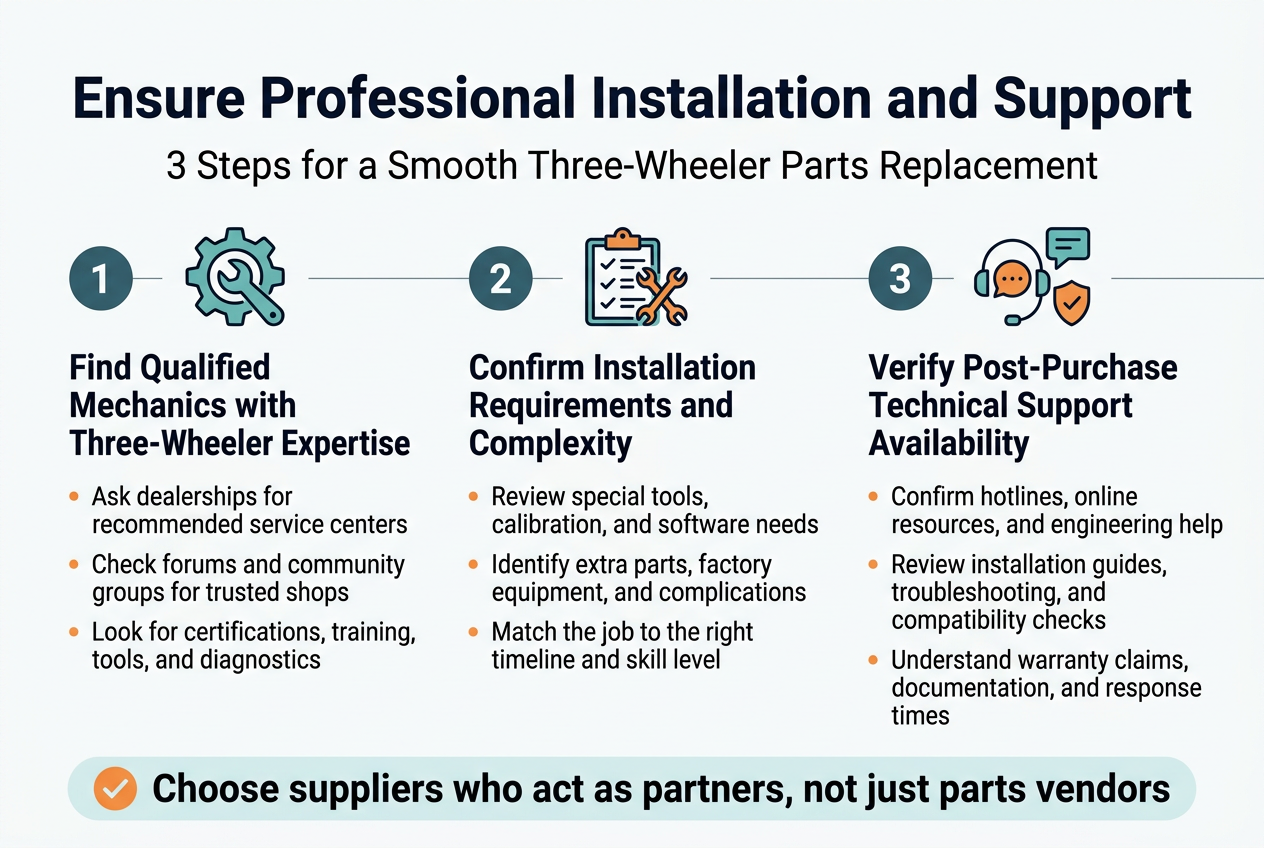
Find Qualified Mechanics with Three-Wheeler Expertise
Finding the right mechanic for your three-wheeler can make or break your parts replacement experience. Not every auto shop has the knowledge to work on these unique vehicles. Three-wheelers have specific design quirks, engine configurations, and mechanical systems that require specialized understanding.
Start by asking local three-wheeler dealerships for recommended service centers. They often maintain relationships with certified mechanics who regularly work on these vehicles. Check online forums and community groups where three-wheeler owners share their experiences with local shops.
Look for mechanics who display relevant certifications or training credentials. Many manufacturers offer specialized training programs for technicians. A certified mechanic will know the torque specifications, proper assembly sequences, and potential compatibility issues specific to your vehicle model.
Don’t hesitate to visit potential shops and ask direct questions about their three-wheeler experience. A confident, knowledgeable mechanic will readily discuss their familiarity with your specific make and model. They should also have the appropriate tools and diagnostic equipment for three-wheeler systems.
Confirm Installation Requirements and Complexity
Before purchasing any part, understand exactly what’s involved in the installation process. Some components appear straightforward but require special tools, calibration procedures, or software programming that only certain shops can handle.
Ask your mechanic to review the installation requirements before you buy. They can identify potential complications, additional parts needed, or whether the job requires factory-specific equipment. This conversation prevents surprises that could leave you with an expensive part you can’t install locally.
Consider the complexity level honestly. Simple items like air filters or spark plugs are usually manageable, but transmission components, electronic control units, or suspension modifications often need professional expertise. Some installations might require multiple technicians or specialized lifting equipment.
Create a clear timeline with your mechanic. Complex installations might take several days, especially if unexpected issues arise. Plan accordingly if this is your primary transportation.
Verify Post-Purchase Technical Support Availability
Quality parts suppliers provide ongoing technical support after your purchase. This support becomes invaluable when installation questions arise or if troubleshooting becomes necessary down the road.
Before buying, confirm what type of technical assistance the supplier offers. Good suppliers maintain technical hotlines, online resources, or direct access to engineering teams. They should provide installation guides, troubleshooting charts, and compatibility verification services.
Check the supplier’s warranty support process. Know who handles warranty claims, what documentation you’ll need, and how quickly they respond to issues. A supplier that makes warranty claims difficult probably won’t provide good technical support either.
Establish a relationship with suppliers who view themselves as partners rather than just parts vendors. These companies invest in customer success because they understand that satisfied customers become repeat customers and referral sources.
Finding the right three-wheeler parts doesn’t have to feel overwhelming when you know what to look for. The five key areas we’ve covered – understanding your vehicle’s specific needs, focusing on quality over cheap prices, checking if parts are genuine, thinking about future maintenance costs, and getting proper installation help – will save you both money and headaches down the road. These steps work together to protect your investment and keep your three-wheeler running smoothly for years to come.
Don’t rush into buying the first parts you find online or at the nearest shop. Take time to research, ask questions, and work with trusted suppliers who stand behind their products. Your three-wheeler is more than just transportation – it’s often essential for your livelihood or daily routine. Making smart parts choices now means fewer breakdowns, lower repair bills, and the peace of mind that comes with knowing you’ve made the right decision for your specific situation.


Write A Comment